Architecting for plasticity - Demystifying the data fabric
summary
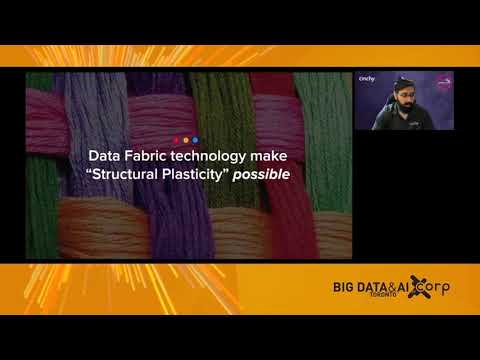
Cinchy’s data fabric claims to eliminate point‑to‑point integration (integration “burns half of IT budget”) and to effectively double IT capacity by managing data directly in a central fabric instead of virtualizing it. Live demo shows a growing graph of dataset nodes and links; the fabric provides autonomous data + a metadata experience, enforces schema evolution without breaking consumers (renames handled by reference), and enables application augmentation. Early production users include large Canadian banks, YMCA and an ISP.
AI-written summary · about
chapters (16)
- 0:00Introduction to data fabric
- 1:25Integration bottleneck in IT
- 2:30Data vs intelligence and plasticity
- 3:55What is a data fabric?
- 5:20Live demo of data fabric
- 7:28Collective vs collaborative intelligence
- 9:16Current application architecture
- 13:36Data fabric solves integration
- 15:43Application augmentation concept
- 17:46Autonomous data and metadata
- 21:57Legacy system augmentation
- 26:15New system development
- 27:40Q&A on data collaboration risks
- 29:05Use cases and industry adoption
- 31:10Tooling and visualization connectors
- 32:12Production users and industries
related talks
 20mData Mesh, Data Fabric & Co - the End of Monolithic Architecture Concepts?
 47mData Mesh vs Data Fabric - in Microsoft Fabric
 20mData Fabric or Data Mesh - Similarities, Differences & Optimal Possible Combination of Both
 22mThe Role Of A Well Implemented Data Mesh In Achieving Your ESG Responsibilities
 25mDemocratizing Data With A Logical Data Fabric, Powered By Data Virtualization
 19mAccelerate your data potential with Fabric
 50mFrom SSIS to Synapse to Fabric - A Data Architects Case Study
 27mModernize your data integration to enable petabyte scale analytics with Microsoft Fabric