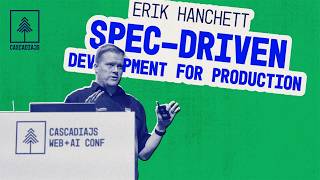
Spec Driven Dev From Single Player to Multiplayer to Ecosystem

summary
Spec driven development uses small, curated context plus agentic search and measurable evals to close the capability gap. Experiments use Claude CodeX and Cursor on a dodge game and on a 50‑case Next.js benchmark and show a jump from ~42% to 92% success when curated knowledge is provided. Across 270 open source libs agent success rises from 60% to 81% using tessle.json, agents.md, and a tiles registry of fragmentable specs that adapt per agent and speed up fixes.
AI-written summary · about
chapters (9)
- 0:00Introduction and welcome
- 1:32AI transforming software development
- 4:42Quest for silver bullets in AI
- 8:53Context engineering as specs
- 12:42Data on context engineering effectiveness
- 18:04Tesla’s spec registry structure
- 23:19Multiplayer context sharing methods
- 29:19Ecosystem context and open source responsibility
- 31:04Closing and call to action
related talks
 01h 04mSpec-Driven Development: Agentic Coding at FAANG Scale and Quality
 28mHow To Use Spec-Driven Development for Production Workflows
 45mSpec-Driven Development in the Age of Agents
 47mSpec-Driven Development with AI Agents From High-Level Requirements to Working SW
 01h 13mSpec-Driven Development: The Fast Track to 10x?
 50mSpec-driven Development using Coding Agents
 18mUsing Spec-Driven Development for Production Workflows
 38mGet Shit Done with Get Shit Done - Spec-Driven development in AI times