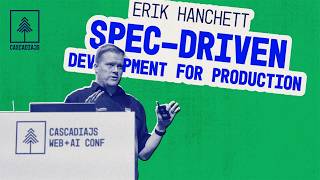
From Vibe Coding to Spec-Driven Development

summary
Nearform reports that spec-driven development replaces error-prone “vibe coding” with concrete artifacts — a PRD and an architecture doc — and a decomposed task backlog; demos use Kira/Kirao to build a 3D unicorn renderer (one run in vague Vue produced sausage‑dog results, the spec run in React yields configurable manes and works). Claims: delivery accelerates with leaner teams and more predictable, repeatable outputs (orders‑of‑magnitude better iteration), great for greenfield MVPs and modernization, weak on large brownfield or legacy stacks, and needs staging gates and MCP connectivity to scale multiplayer work.
AI-written summary · about
chapters (9)
- 0:00Introduction and background
- 1:12From AI-assisted to spec-driven
- 4:22Traditional vibe coding demo
- 7:30Spec-driven approach explained
- 13:07Building blocks of spec-driven
- 16:19Scaling to multiplayer teams
- 19:10Lessons learned and use cases
- 21:58Tools and future outlook
- 24:22Q&A and closing
related talks
 39mFrom vibe coding to spec-driven development
 49mVibe Coding for Production
 18mUsing Spec-Driven Development for Production Workflows
 57mFrom Vibe Chaos to the Rise of Spec-Driven
 45mSpec-Driven Development in the Age of Agents
 28mHow To Use Spec-Driven Development for Production Workflows
 25mspec-driven development
 01h 13mSpec-Driven Development: The Fast Track to 10x?