Simplicity: not just for beginners
summary
Argues that real simplicity in C++ is hard work not beginner trimming and gives concrete habits: replace manual loops with use accumulate and algorithms, prefer ranged for and small named functions, reduce parameters by introducing domain types, prefer RAII/destructors for cleanup, mark locals const, avoid magic numbers, use non‑static member initializers and libraries, and measure before tuning. Notes surprising industry stats (roughly five lines of code per day), shows how renaming and small refactors remove long‑standing bugs, and warns against premature complexity.
AI-written summary · about
chapters (16)
- 0:00Intro
- 0:22When We Teach, We Start Simple
- 5:19What is simple code?
- 6:56Is Simpler Better?
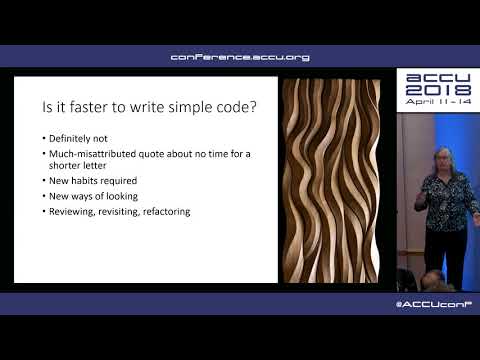
- 9:35Is it faster to write simple code?
- 11:21Is simpler code more correct?
- 17:15Does simpler code run faster?
- 22:57What's in it for you?
- 29:43The Easiest Step
- 30:52Names really help
- 32:26Using names
- 36:20Short Functions
- 40:46Avoid really long lists of parameters
- 50:36Const all the things
- 54:17Keep up with the standard
- 57:39The pit of success
related talks
 01h 21mEmpirically Measuring, & Reducing, C++’s Accidental Complexity
 01h 01mEasy to Use, Hard to Misuse: Declarative Style in C++
 55mIdentifying Common Code Smells (In C++)
 01h 01mSome Programming Myths Revisited
 59mC++ Code Smells
 01h 08mMidnote: For the Sake of Complexity
 37mSimplicity Matters
 54mWriting C++ to Be Read