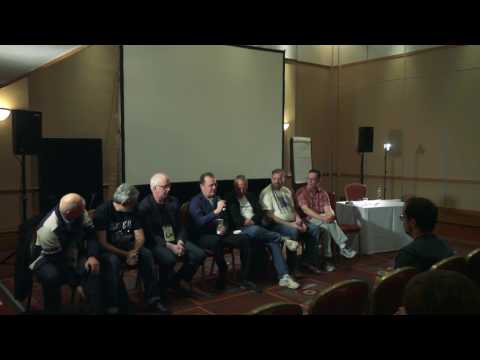
Grill the C++ committee
summary
Panelists explain how to push real changes: file a short proposal (motivation, examples, proposed wording) via isocpp.org and open a library issue rather than just complain, because nothing changes without a paper. Modules and coroutines are moving as technical specification work (coroutines in comment ballot, modules one meeting behind). Library gaps are often just lack of authors — e.g. stack/priority_queue lack clear because nobody wrote a proposal — and Boost plus TSs serve as practical incubators before standardization.
AI-written summary · about
chapters (16)
- 0:00Committee introductions
- 2:32The standardization process
- 6:53Adding features to the standard
- 11:24Guidelines for new contributors
- 15:09Design and naming conventions
- 18:43Feature interaction and testing
- 24:34Modules and coroutines status
- 26:43The role of Boost and TS
- 36:08Standardization speed and balance
- 38:23Impact of regular releases
- 43:02C++17 retrospectives
- 49:38Language complexity and teaching
- 58:46Containers and deprecation
- 1:08:18Time and date libraries
- 1:11:16Future working groups and tools
- 1:17:31Closing thoughts on C++20
related talks
 01h 25mGrill the C++ Committee
 19mDemystifying the C++ Committee
 01h 01mC++ Committee's Library Evolution Working Group
 07mC++ Standardization
 01h 33mCommittee Fireside Chat
 01h 03mC++ Standards Committee Fireside Chat
 54mHow Is a Programming Language Standardized?
 01h 02mC++ Committee's Library Evolution Working Group Panel