Network Multi-tenancy in Xen-based Clouds

summary
Explains concrete options for tenant isolation on Xen with Apache CloudStack and what each actually requires and scales to: VLANs hit a 4K VLAN limit and force trunking every hypervisor; overlays like VXLAN/GRE overlays use a 32‑bit GRE/VXLAN key and need a controller to prebuild tunnels; L3 isolation enforces rules in iptables in dom0 using ipset/ipsec optimizations; CloudStack integrates with SDN vendors (Midokura, Big Switch, Juniper/Contrail, OpenDaylight) and shows iptables-based L3 mode running in production at tens of thousands of VMs.
AI-written summary · about
chapters (19)
- 0:00Introduction
- 0:51Agenda
- 1:40Apache Cloud Stack
- 3:00Amazon Cloud Stack
- 5:09Cloud Stack Hardware
- 7:47Network Multitenancy
- 9:17Multitenant
- 10:58Multitenant options
- 11:55L3 isolation
- 13:21L2 isolation options
- 16:02Network virtualization
- 17:32Cloud stack orchestration
- 18:22Cloud stack overlay
- 19:27Cloud stack networking
- 22:18IPtables
- 23:03Cloud Stack
- 23:52Service Catalog
- 24:21Hardware Appliances
- 25:09Security Groups
related talks
 22mSDN Options in Apache CloudStack
 30mHow we integrated L3 services into one of the biggest OpenStack Public Clouds - OVHcloud case study
 33mMulti-tenant K8s Networking with Kube-OVN
 38mHow can a network be "virtual"?
 17mMTS: Bringing Multi-Tenancy to Virtual Networking
 40mCloud, Kubernetes, and Service Networking - Taming the Turtles
 22mConnecting virtual machines in the cloud age
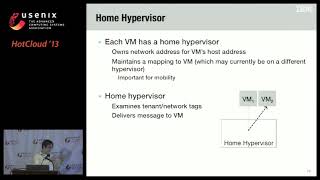 23mAIN: A Blueprint for an All-IP Data Center Network