One Universal Language for All Machine Learning Models

summary
Deep learning models trained in TensorFlow, PyTorch or Keras export to a common protobuf file that expresses a computational graph and standardized operators, letting teams convert without retraining and run the same model on optimized runtimes for CPU, GPU or accelerators. ONNX claims model portability, separation of training and inferencing, and hardware acceleration; Facebook and Microsoft started it in 2017 and Amazon Intel NVIDIA IBM support it under open governance on GitHub.
AI-written summary · about
chapters (31)
- 0:00Introduction
- 2:50What is Deep Learning
- 3:35What is Speech Recognition
- 6:25Deep Learning Challenges
- 7:45EndtoEnd Workflow
- 9:01Train Model Problems
- 11:49No Standard Across AI
- 13:20What is Omix
- 14:11Interoperability
- 14:51Hardware Optimization
- 16:58Why Onyx Matters
- 18:09Summary
- 18:51Next Session
- 20:14Presentation
- 20:53Account Takeover
- 22:32Payroll Account Takeover
- 24:48Phishing Email
- 25:39How do I identify them
- 26:29Data
- 34:39Key takeaways
- 35:51Wrap up
- 36:38Karina
- 37:10Rachel
- 39:16Containers vs VMs
- 40:46Why Kubernetes
- 42:35Where is Kubernetes
- 43:42Digital Enterprise Transformation
- 45:13Case Study
- 47:10Outcomes
- 50:14TLDR
- 52:57Questions
related talks
 30mThe Evolution of ONNX: Driving Interoperability in AI...
 45mLeverage Power of Machine Learning with ONNX
 41mOpen standards for machine learning deployment
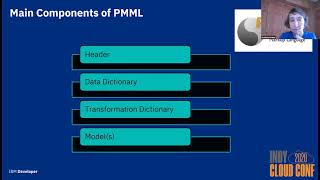 34mOpen Standards For Machine Learning Model Deployment
 30mScalable ML acceleration with ONNX Runtime
 05mONNX Runtime
 51mMaking neural networks run in browser with ONNX
 21m#10 Open Source Forum 2019 Shintarou Okada