Decentralized and Stateful Serverless Computing on the Internet Computer Blockchain

summary
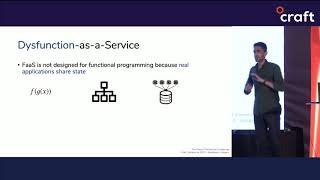
The Internet Computer runs stateful canisters compiled to WebAssembly under a Wasmtime sandbox, with canisters allowed up to 64 GB memory and deployed across ~550 nodes in 18 countries. State is checkpointed every 500 rounds using heap-delta pages and on-demand page mapping; prefetching yields 1.25–3.5x speedups. Billing uses instruction-count billing (not wall clock). Production numbers show ~300,000 canisters holding ~3.5 TB state. Benchmarks: small CPU jobs beat top serverless, larger jobs run at ~50% performance; ~20% overhead is blockchain work and ~20% is the execution layer.
AI-written summary · about
chapters (21)
- 0:00Internet Computer platform
- 0:24Decentralized computation vision
- 1:08Replicated state machines
- 2:12Canisters and WebAssembly
- 2:55Four system layers
- 3:58Update vs query messages
- 5:41Byzantine fault tolerance
- 6:05Statefulness and persistence
- 7:28Execution environment
- 9:57Page protection and single handler mechanism
- 11:20Memory optimizations
- 12:03Scheduling challenges
- 13:07Billing and fairness
- 14:11Instruction slicing
- 15:15Serverless computing
- 16:43Decentralization benefits
- 17:05Performance comparison
- 18:26Memory overhead
- 19:29Adoption metrics
- 20:10Conclusion
- 20:32Q&A
related talks
 30mA Greener, Cost-Effective Cloud with Serverless WebAssembly
 20mCollecting Garbage on the Blockchain
 36mA Greener, Cost-Effective Cloud with Serverless WebAssembly
 26mWebAssembly as a cloud-native runtime for serverless functions
 17mHierarchical Integration of WebAssembly in Serverless for Efficiency and Interoperability
 40mThe State of Serverless Computing
 24mA Greener, Cost Effective Cloud with Serverless WebAssembly
 30mThe Future of the Cloud is WebAssembly