Valuing Smart Contract Platforms

summary
Claims value is tied to discounted cash flow of transaction fees not to the need to pay miners, with $148M in 2018 vs 40M in 2017 as base revenue inputs. Uses a DCF with a 3.5x growth assumption and conservative TAM to justify roughly double current price if assumptions hold. Predicts atomic state transitions remain scarce after sharding, creating independent fee markets per shard and a likely fee markets split by shard with up to 100x fee differentials between DeFi-heavy and low‑value shards.
AI-written summary · about
chapters (7)
- 0:00Token valuation models
- 1:50Flawed fee value driver
- 3:57Ethereum fee growth
- 6:49DCF model for Ethereum
- 10:45Sharding and fee dynamics
- 15:00Fees versus store of value
- 17:10Gas price expectations
related talks
 17mState of Smart Contracts in Decentralized Finance
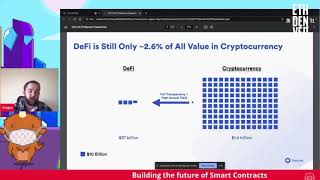 21mBuilding the future of Smart Contracts
 28mSharded Smart Contract Architecture for Smart Contract Developers
 13mDecentralized Blockchain Applications, More Than Smart Contracts
 15mPowering DAOs with the Smart Contract Stack
 45mSmart contracts in a blockchain change everything
 25mLegal Infrastructure for DeFi and DAOs
 18mExpanding DeFi’s Global Footprint