Workshop: Antenna tuning for your LoRaWAN device
summary
Workshop shows hands-on antenna tuning for LoRaWAN devices using a low-cost NanoVNA and UFL feed, with measured S11 tuning rather than theory. Examples: a printed miniature inverted‑F tuned from ~849 MHz to ~900–925 MHz by trimming (bandwidth ~30–35 MHz) and a three‑element miniature CP antenna for Lacuna space links giving a double dip around 865 MHz, sensitive to casing and hand proximity. Methods include solder‑jumpers/zero‑ohm links, cutting traces, and simple polystyrene supports; reported efficiency ~−1.2 dB (~75%).
AI-written summary · about
chapters (19)
- 0:00Intro
- 0:44Outline
- 1:26Antenna performance indicator
- 3:16Antenna key parameters
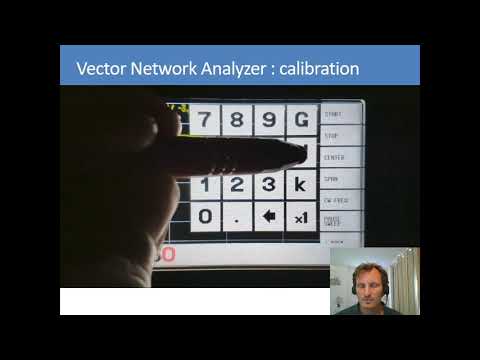
- 7:52Vector Network Analyzer: calibration
- 12:09Monopole Antenna
- 12:56Inverted L Antenna
- 14:24IFA: Inverted F Antenna
- 15:04UCA Antenna layout
- 16:55UCA Antenna tuned for EU band
- 17:12Antenna design
- 17:46How to connect my antenna
- 19:10UCA Antenna: effect of environment
- 20:43UCA Antenna tuning : Freg. Bandwidth
- 21:16UCA Antenna tuning to US band
- 21:38Antenna tuning with casing
- 22:02Tri-fillar antenna Radiating element
- 24:46Tri-fillar antenna tuning
- 26:08Conclusion and Perspectives
related talks
 16mAntenna Requirements for Tracking solutions using LoRaWAN w/The Things Stack
 34mAn Academic Perspective on LoRaWAN
 14mCurvingLoRa to Boost LoRa Network Throughput via Concurrent Transmission
 21mClosed loop tracking
 33mInventor of LoRa talks about the future of LoRa
 25mUpdate on 2.4Ghz LoRaWAN
 36mBuilding LPWAN Solutions that last for Years
 36mspeak about drones in LoRaWAN