Strapi at

summary
Company migrates content to Strapi v3 and federates it with a Postgres CQRS read store via Hasura remote schema, exposing a single GraphQL surface that avoids writing many REST endpoints. Architecture uses event sourcing and CQRS with an event log for temporal queries, Postgres read models, JWT/webhook auth into Hasura, and auto schema inference plus remote schema stitching. Team uses codegen to emit TypeScript clients and Helm bindings, and flags Hasura config-by-API as awkward for deployment.
AI-written summary · about
chapters (9)
- 0:00Introduction and background
- 1:25Business use case and goals
- 3:32Event sourcing and CQRS explained
- 4:35Strapi as headless CMS
- 5:18Federated data access with Hasura
- 6:42GraphQL integration demo
- 8:07Security and webhook setup
- 8:51Code generation benefits
- 9:33Results and future outlook
related talks
 19mBuilding Planet Scale Cloud Native Apps with GraphQL & Distributed SQL
 11mBuilding a GraphQL based open-source infrastructure project
 05mGraphQL for Web and Mobile Apps Made Simple
 29mBuilding modern web-applications with Hasura's GraphQL engine
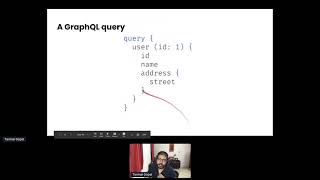 32mModernize development and activate legacy data with GraphQL
 32mThe Hasura Journey
 22mUnlocking API Potential with Hasura's GraphQL Engine
 28mModernizing App Development: Planet-scale GraphQL & Distributed SQL