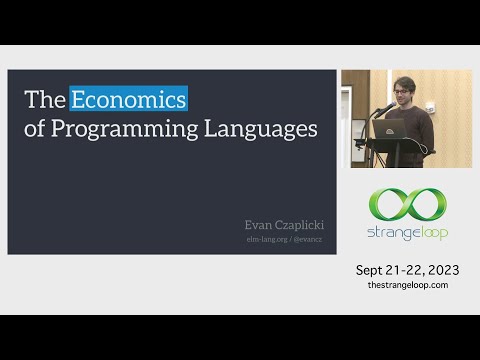
The Economics of Programming Languages
summary
Argues that language outcomes trace to real money and organizational choices not rhetoric giving numbers like $49 billion traffic acquisition cost and estimates ~$15 billion to Apple and Firefox receiving ~$400M, explains why Go ends up with five engineers while Dart gets 30, catalogs funding models (patronage consulting grants hosting donations) and the design incentives each creates, shows a local Elm-to-C/SQL compile-and-demo prototype on a laptop, and names the risk of being Jeffed by large platforms.
AI-written summary · about
chapters (15)
- 0:00Introduction to Elm
- 3:33Programming language funding
- 4:04The role of internet landlords
- 11:43Developer relations and costs
- 13:36The open source way myth
- 15:57Switching costs and platforms
- 18:48The disadvantage of small authors
- 20:54Corporate language models
- 24:28Independent language models
- 28:22The 'Jeff' problem in hosting
- 30:23Design incentives and risks
- 33:40Lessons from patronage
- 36:42Comparing funding models
- 39:03Technical future of Elm
- 40:21Concluding thoughts
related talks
 29mMoney, Money, Money...
 27mMoney, Money, Money - Writing software, in a rich (wo)man's world
 01h 04mOpen Source, Open Mind: The Cost of Free Software
 47mThe Cost of Code
 39mWhy we code
 41mThis is bigger than us: Building a future for Open Source
 18mHow to get rich (quick) with JS
 59mA Programming Lanaguage Is Its Community