Distributed Storage in the Cloud

summary
Overview of cloud storage choices with concrete recommendations: treat Kubernetes as the cloud OS and design for node loss; prefer open source stacks to avoid vendor lock‑in; use commodity block and network block for basic volumes, NFS for shared files only when acceptable, and MinIO for S3‑compatible object storage. For streams and pipelines use Kafka, for metrics Prometheus/VictoriaMetrics/Timescale, for OLTP PostgreSQL/MySQL (Percona distributions) or Redis for KV, and deploy Percona operators and PMM to run, back up and monitor databases on Kubernetes.
AI-written summary · about
chapters (14)
- 0:00Introduction
- 2:27What is your take on the cloud
- 4:05What is the original purpose of cloud
- 7:50Kubernetes
- 10:45Distributed databases
- 14:14Commodity storage
- 15:56Open source storage
- 17:03Object storage
- 18:35Object storage vendors
- 19:45Database vendors
- 24:23Databases
- 27:05Solutions
- 30:42Key Value Stores
- 33:42Percona
related talks
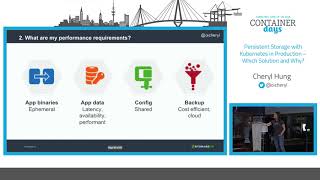 28mPersistent Storage with Kubernetes in Production - Which Solution and Why?
 36mPersistent Storage with Kubernetes in Production - Which Solution and Why?
 26mBest Practice for Cloud Native Storage in Finance Industry
 37mBuild a Kubernetes Based Cloud Native Storage Solution From Scratch
 29mAccelerate your cloud architectures with the right storage options
 44mRunning Non-Cloud-Native Databases in Cloud-Native Environments
 41mThe New Generation Of Data Stores
 33mSponsored Session: Open Source Cloud Native Storage Solutions for Stateful Applications from ...