OLTP SQL Database Query Tracing and Linting

summary
Databricks builds client-to-server query tracing that tags queries so operations can aggregate by tenant, RPC, API or error codes and quickly pinpoint which tenant causes a load spike; the system traces premerge CI queries through production and enforces query scoring in CI to warn or ban antipatterns. Engineering runs thousands of OLTP instances across regions and clouds, blocked hundreds of expensive queries, avoided incidents that once caused a 600× slowdown or 100M-row scans, and scores databases with a database usage scorecard.
AI-written summary · about
chapters (9)
- 0:00Introduction
- 1:18Managing thousands of SQL databases
- 3:05Client-side query tracing solves incidents
- 5:15Query scoring in CI for prevention
- 7:01Dangerous patterns caught by scoring
- 9:53Unpredictable queries and optimizer risks
- 10:57Unified database usage scoring
- 13:49Reactive and proactive database management
- 14:50Closing and hiring
related talks
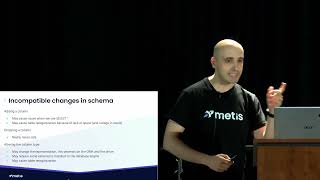 32mOpenTelemetry, databases, and machine learning
 24mDevOps. Monitoring Databases. On-Premise and Cloud environments
 32mManaging Databases in the Cloud in Broken
 49mOLTP or OLAP: why not both?
 44mTidy Space, Tidy Mind; How to Better Manage SQL Environments Across Cloud Providers
 50mAdam Furmanek: You Must Test Your Databases And Here Is How
 54mOLAP on the Cloud with Azure Databricks and Azure Synapse
 22mCorrelating Application and Database Performance Using OpenTelemetry