How We Introduced CI/CD For...
summary
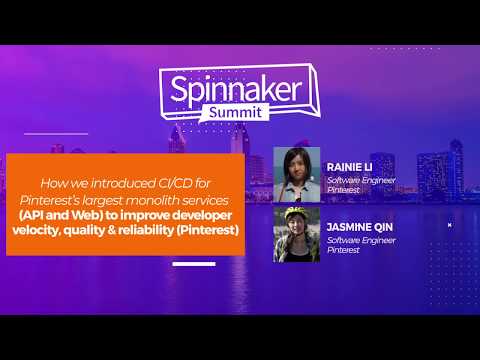
Pinterest replaces two scheduled deploys per day with 25 deployments per day, cuts commit‑to‑prod to under 4 hours, and shrinks median change lists from ~139 commits to single digits. Engineering builds a Teletraan custom stage for Spinnaker, integrates Kayenta with OpenTSDB for canary scoring, makes script stages read‑only for security, and runs Spinnaker on Kubernetes (Spinnaker builds Spinnaker). A new service Hermes wraps CI/CD workflows and standardizes pipelines.
AI-written summary · about
chapters (30)
- 0:00Introduction
- 0:36What is Pinterest
- 1:25Monthly active users
- 1:47Pinterest Web API
- 2:15Data
- 2:44Agenda
- 3:11Previously
- 3:59Pain Points
- 4:31Lessons Learned
- 4:47Why We Adopt Spinnaker
- 6:31Deployment Changes
- 7:09Micro Services
- 7:51Simple Pipelines
- 8:37Open PSDB
- 9:30Customer Stage
- 11:00Security
- 13:49Log Monitoring
- 15:16Deployment
- 17:05Introducing Hermes
- 17:32OneStop Operations
- 19:03Demo Section
- 20:18Master Pipeline
- 21:53Integration Test
- 23:25Pipeline
- 26:26SubPipeline
- 27:05Demo Pipeline
- 27:30Demo Teletraan
- 31:14Demo Jenkins Autotrigger
- 34:31Closing Thoughts
- 35:34QA Session
related talks
 12mHow we deploy Spinnaker microservice pods via Spinnaker at Pinterest
 33mEvolving a Continuous Delivery Workflow
 52mContinuous Deployment to the Cloud using Spinnaker
 31mHow Spinnaker is Shaping Delivery Excellence at SAP
 20mEmpowering Continuous Delivery with Spinnaker: A State of th...
 28mScale CI/CD in Your Enterprise Through An Internal Spinnaker as-a-Service Model
 14mHow We Decided the Time Was Now - Choosing Spinnaker
 33mPanel Discussion: Spinnaker Success - CD as a Service using Spinnaker