Embracing Change: Infrastructure Experiment...

summary
Netflix uses Spinnaker and a separate control plane called Chop to run randomized controlled infrastructure experiments: deploy baseline and canary clusters, route a small randomized portion of live traffic, collect Atlas metrics, and run canary analysis with real‑time one‑minute checks that can abort early. Pipelines run daily or weekly (change, chaos, load), can fail if a metric exceeds a 20% effect size, and report scores (examples show score 100) to validate changes before full rollout.
AI-written summary · about
chapters (27)
- 0:00Introduction
- 1:01Continuous Integration Delivery
- 1:25Rate of Change
- 1:42Netflix
- 2:11Experimentation
- 2:56Delivery Mechanism
- 3:51Context Setting
- 4:34Randomized Controlled Trials
- 6:16Canary Strategy
- 7:43Experiment Types
- 8:58Example
- 10:13Hypothesis
- 11:08Results
- 11:46CPU utilization
- 12:30Scale to production
- 19:23Retrospective Validation
- 21:59Experiment
- 23:16AB Experiment
- 25:11Defining Experiments
- 25:44Test Case
- 26:29Experimental Types
- 29:21RealTime Monitoring
- 30:06Canary Analysis
- 30:50Running Multiple Experiments
- 31:34Pipelines
- 34:03Conclusion
- 35:10Questions
related talks
 58mBuilding a Culture of Continuous Delivery
 49mChaos & Intuition Engineering at Netflix
 52mContinuous Deployment to the Cloud using Spinnaker
 27mBehind the Scenes: Running Critical Services @ Netflix
 38mChaos Engineering: A Step Towards Resilience
 38mChaos Engineering
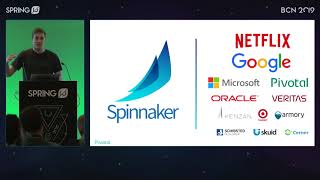 51mCutting edge Continuous Delivery: Automated Canary Analysis through Spring based Spinnaker
 17mBeyond Blanket Freezes: Enabling Safe Innovation During Critical Events at...