Runtime Permissions for Privacy in Proactive Intelligent Assistants
summary
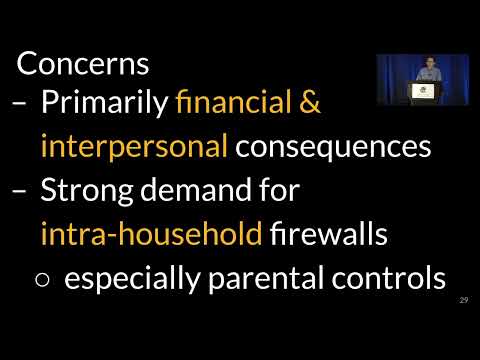
A simulated proactive assistant implemented via Wizard of Oz listens continuously and requests runtime permissions every time it would use heard content; 23 pairs of participants take part and most react positively but prefer fewer interruptions. Requests quoting transcribed text cause timely allow/deny decisions despite WOZ lag, participants deny irrelevant requests and allow most feature-scoped ones, and learning vs rules trade off convenience and control: automation-trusting people prefer learning, privacy-conscious prefer rules but find them confusing. Permissions give a sense of control but are insufficient alone, so layering controls (voice recognition, mute, parental rules, audits) is recommended.
AI-written summary · about
chapters (4)
- 0:00Start
- 2:56Alva is listening
- 5:43Reactions
- 9:52Runtime Permissions for Privac in Proactive Intelligent Assistant
related talks
 06mInvestigating Users’ Preferences and Expectations for Always-Listening Voice Assistants
 14m“I do (not) need that Feature!” – Understanding Users’ Awareness and Control of Privacy
 09mConsent on the Fly: Developing Ethical Verbal Consent for Voice Assistants
 06mEvaluating and Redefining Smartphone Permissions with Contextualized Justifications for
 06mIs Someone Listening? Audio Related Privacy Perceptions and Design Recommendations from ...
 15mTurning Privacy Risk Assessment Into 20 Questions for Developers
 30mYour AI Has Too Much Access: Authorization for Coding Agents
 07mVision: Human-as-the-Unit Privacy Management with AI Agents