How Biology Benefits from Technological Discoveries

summary
Claim: a company uses 3D holographic projection printing to decouple speed and resolution and build functional microvasculature. The system prints up to 1 cm³ in minutes, creates lumens about 7 µm (capillaries are 5–10 µm), and uses microvasculature data from Three Skins down to 1 µm to generate CAD files. Roadmap: biopsy → grow cells → print → functional test with a target of organs within four months. Current challenges: hit a ~1 billion cell threshold and validate long-term function.
AI-written summary · about
related talks
 38mThe Potential Of Additive Manufacturing
 42mHacking the World with Digital Biology
 54mDon’t Buy It, Print It: Miniaturized Biosensors via 3D Printing
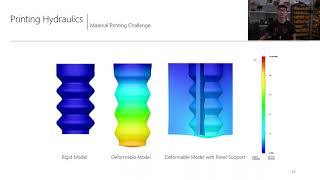 12mFabHydro: Printing Interactive Hydraulic Devices with an Affordable SLA 3D Printer
 38mDesktop 3D printing within the clinical environment
 10mBioLIG: Functionalizing Biocomposites with Laser-induced Graphene for Bio-Rapid Prototyping of El...
 08mCapturing Tactile Properties of Real Surfaces for Haptic Reproduction
 46mRise of the Machines – Technology in Humanity