What if privacy had an API?

summary
Claims a working zero‑trust PII data privacy vault that removes sensitive fields from app infrastructure by de‑identifying at collection and issuing tokens, uses polymorphic encryption for encrypted-in-memory operations, exposes REST APIs and SDKs to detokenize under policy, and enforces row/column restrictions so a customer‑support agent limited to Arizona only sees a name and last four digits. Context is handled via context‑aware authorization and short‑lived bearer tokens (example: 15‑second TTL) to dramatically reduce blast radius if credentials are stolen.
AI-written summary · about
chapters (11)
- 0:00Introduction to privacy APIs
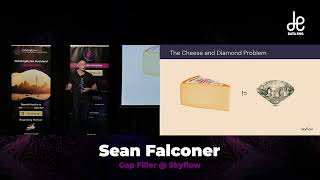
- 1:07The cheese and diamond problem
- 3:31Sensitive data sprawl issue
- 5:17Zero trust data privacy vaults
- 7:46Flux capacitor analogy explained
- 8:07Building the privacy API core
- 9:31Controlling access to data
- 10:12Live policy demo
- 12:17Context-aware authorization
- 14:46Privacy by engineering shift
- 15:08Conclusion and resources
related talks
 24mStop Making Your Data Team the 'Data Police'
 50mZero Trust Privacy: Rethinking a Data Strategy
 24mDetecting and Protecting PII at Runtime
 18mDesigning for data privacy
 01h 28mData privacy vault 101
 40mZero Trust and Privacy: Moving Security Closer to the Target
 24mData Security for startups
 17mZero Trust access with zero waiting, zero pain, and zero compromises