Cryptography 101: What Every Swift Developer Should Understand

summary
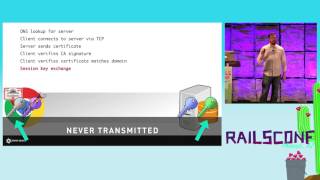
Covers core claims with concrete algorithms and tradeoffs: hashing provides one‑way digests (SHA‑256 given as example), symmetric AES‑128/256 is fast but needs key sharing, asymmetric RSA (1024 insecure, RSA‑2048 recommended) is slow but enables signatures and key transport, and hybrid schemes use RSA/ECDHE to encrypt a random secret used for AES. Explains TLS handshake steps (uses ECDHE, certificates, and chain to a root CA), notes TLS 1.3 is preferred but TLS 1.2 is shown for clarity, and reports a Wi‑Fi proxy that replaced and invalidated certificates.
AI-written summary · about
chapters (9)
- 0:00Introduction to concepts
- 0:49Understanding hashing
- 1:42Symmetric and asymmetric crypto
- 3:09Digital signatures
- 4:20Practical verification
- 4:53Hybrid encryption and keys
- 7:51Advanced cryptographic tools
- 8:20TLS handshake in practice
- 14:22Conclusion
related talks
 42mCryptography, hashing, encryption without the math
 46mFrom substitutions to public keys - an introduction to cryptography
 36mThe Art & Craft of Secrets: Using the Cryptographic Toolbox
 48mCryptography for Beginners
 41mBetter Than ROT13
 01h 04m Cryptography For Newcomers - The hitchhiker's guide to cipher in devs
 25mCryptography Isn't Scary
 47mWhy? Because I can - the stories from the crypt(ography)