Full stack Scala

summary
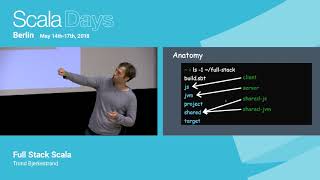
Covers using Scala on both backend and frontend by adopting Scala.js to build single-page and mobile apps. Describes how Scala.js enables immutability, functional programming and type safety in the browser while interoperating with existing JavaScript libraries, and shares practical lessons from using Scala across the entire stack at a startup.
AI-written summary · about
chapters (24)
- 0:00Intro
- 3:38High-level Architecture
- 4:52How important is the frontend?
- 15:06Choosing Frontend Language
- 18:11Choosing Ul Framework
- 18:36What is React?
- 19:47Simple Mental Model
- 20:28Real World Composition
- 20:45Making changes
- 23:54Frontend Overview
- 25:55Container Collaboration
- 29:55Example Container Component
- 31:00Example Backend
- 31:38Pure Component
- 33:35Taking advantage of immutability: Performance
- 35:17Taking advantage of immutability: Undo/Redo
- 36:00Remote Data Challenges
- 37:55Retrieving Data
- 39:23Our Approach
- 42:48Data Store Collaboration
- 46:26Bridging Native React Components
- 46:48Example Bridge Component
- 48:04Example MDL Use
- 48:27The Future
related talks
 31mSCALA FROM B TO F - BACKEND DEVELOPER ON FRONTEND
 29mFull Stack Scala Web Application.
 40mFull Stack Scala
 37mFull Stack Scala Web Application
 20mQuickly develop web applications with the FastScala framework
 45mINTEGRATING SCALA.JS INTO AN EXISTING FULL STACK APP
 31mSCALAJS - WEB WITHOUT PAIN OF JAVASCRIPT
 34mFULL-STACK SCALA 3 WITH TYPELEVEL STACK