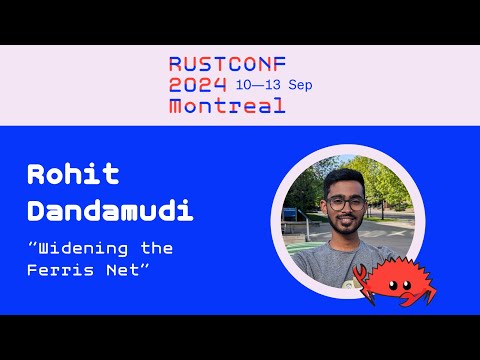
"Widening the Ferris Net"
summary
Analyzes GitHub commit data for the top 500 contributors and builds a social graph showing heavy concentration in the US and Germany, then contrasts that with on‑the‑ground growth in India where activity jumps from one meetup in 2021 to 34 physical events last year. Highlights local wins — a Nigerian monthly newsletter, Japanese and Ukrainian local conferences, Hispanic Rust translating the book — and flags problems: low visibility of Rust Zulip, lack of diversity, weak cross‑community collaboration, and the need to fund programs like Rust Bridge and mentorship to turn consumers into contributors.
AI-written summary · about
chapters (14)
- 0:00Introduction
- 1:13Why Rust communities matter
- 3:24Rust survey demographics
- 4:33Global accessibility barriers
- 5:39Rust contributor distribution
- 7:12Rust India growth
- 9:21Rust India events highlights
- 11:45Public sector Rust adoption
- 13:18Other growing Rust communities
- 15:39Barriers to global contributions
- 17:46Structural community challenges
- 19:51Community support initiatives
- 20:35Key growth improvements
- 23:23Q&A
related talks
 20mReflection on the humans powering Rust ecosystem
 15mThe Inclusive Community Imperative
 27mOpen-source in the eyes of a Minority Contributor
 39mState of diversity in open source communities
 51mBeyond the basics: Contributor experience, diversity and culture in open...
 40mDiversity in Open Source, an Asian Perspective
 25mThis is bigger than us: Building a future for Open Source
 53mCan we optimize communities