Open Source Instead of Outsource your Database

summary
Argues that choosing open source databases (examples named: MySQL, PostgreSQL, MongoDB) gives long-term ownership, portability, and community security while outsourcing buys ramp-up speed and managed ops at recurring cost. Lists trade-offs: time to build, team size, compliance, and upgrade/transfer pain when locked to a vendor. Demonstrates Appwrite as a concrete alternative — Appwrite: self-hosted BaaS with auth, storage, database, cloud functions and real‑time events — and shows a Docker one‑liner to get it running locally.
AI-written summary · about
chapters (8)
- 0:00Introduction and welcome
- 1:24Choosing your tech stack
- 5:41Open source vs outsourcing databases
- 11:22Pros and cons of open source
- 15:35Balancing open source and outsourcing
- 18:04What is a REST API?
- 21:24Introducing Appwrite
- 23:10Recap and closing
related talks
 45mLeveraging Open Source Databases for Strategic Advantage
 17mWhy Public Database as a Service is Prime for Open Source Distribution
 38mOpen Source - A Blessing or a Curse?
 39mOpen Source Is Winning but We Can Still Lose
 23mOpening remarks and Key Open Source Databases Strategies That Shape 2022
 25mState of Open Source Databases
 23mChampioning Open Source Databases
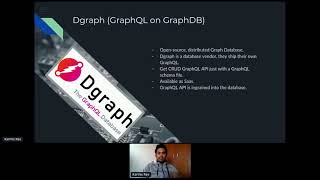 23mOpen Source, Graphs and GraphQL: The next frontier of modern applications