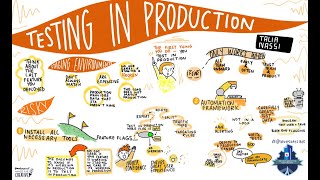
Testing in Production

summary
Claims that testing in production yields higher accuracy, faster feedback (no mocks), and fewer escaped bugs, demonstrated by using feature flags, an automation framework with a job scheduler and alerting, and a test-user naming convention plus backend flags to exclude test data from analytics. Deploys to private production canaries (5–10% traffic), runs end-to-end suites on a cadence (≈30–60 minutes), and reports increased developer velocity and confidence because regressions are caught and rolled back before full release.
AI-written summary · about
chapters (15)
- 0:00Intro
- 1:34My Interview
- 3:04What's wrong with staging environments?
- 6:16Testing in production only works when...
- 8:05Install the necessary tools
- 10:56The Code
- 11:06The Test
- 11:26The best part?
- 11:48Job Scheduler
- 13:19Carefully create test data
- 15:32Deploy to a production canary
- 16:52What if there's an issue with your canary code?
- 18:11Long term effects
- 19:38What about other non production tests?
- 20:19Shifting your company's testing culture