Motion in React

summary
Compares concrete implementations: use CSS transitions/keyframes for simple cases and keep to opacity/transform for performance; use requestAnimationFrame when you need JS control; Netflix TV UI forces JavaScript-only animation so experiments prioritize image prioritization and 3D render hooks; demonstrates libraries and patterns — Popmotion for ref-based imperative anims, react-pose (with styled-components) or react-motion for component-driven springs, mentions Web Animations API and Houdini as emerging low-level browser tools.
AI-written summary · about
chapters (11)
- 0:00Start
- 1:39TOOLS & MOTION DESIGN SEEM VERY FAR APART
- 2:13USERS AND USABILITY
- 3:33Environment Language Framework Library YOUR Code!
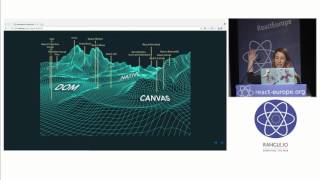
- 3:50ENVIRONMENT determines your rendering engine, languages, and capabilities
- 8:14Complex interactions across user behavior, multiple components and data sources
- 15:42IN REACT, WE CARE ABOUT Composition and Abstraction
- 17:06WHAT DO WE NEED REACT FOR? Composition and Abstraction
- 20:03Animating with Styled Components + React Pose
- 21:00Have motion be part of your design spec
- 21:20Have a framework for introducing frameworks