Predicting flight compensation - a case study
summary
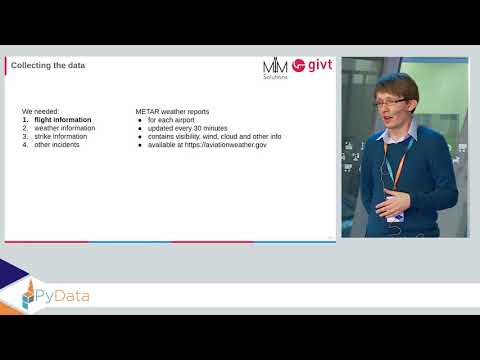
A machine learning pipeline verifies EU compensation claims using purchased flight and METAR weather data, trained with about 250 features on LightGBM and achieving AUC ≈ 0.91; SHAP values explain single decisions. Data gaps fall from ~15–20% to ~8% after changing providers and manual filling. Deployed as a REST HTTP server on Google Cloud, average verification takes a few seconds. Automatic rules handle ~50% of cases, the model covers ~11%, and model/human agreement sits at 83% (17% disagreement).
AI-written summary · about
chapters (12)
- 0:00Flight compensation project intro
- 1:58EU flight compensation law
- 3:28Automating claim verification
- 5:55Data collection challenges
- 8:50Fixing missing claim data
- 10:19Features from disrupted flights
- 11:26LightGBM compensation model
- 13:55Model explained with SHAP
- 18:10REST API deployment
- 20:42Production performance & verification
- 22:10ML project lessons
- 23:39Q&A
related talks
 34mMachine Learning to know if you R coming
 20mMachine Learning for Smarter Expense Management
 30mDriving a Higher Level of Customer Support with Machine Learning
 22mTaking Flight with AI and ML: Revolutionizing Airline Ops
 40mML in Production: Why Analysts and Backend Struggle to Agree
 22mEngineering Predictive Platforms
 28mBeyond Prediction Performance: How Modeling Decisions Shape Fairness Outcomes in Statistical...
 56mMachine Learning for .NET developers