Fizz Buzz in Tensorflow

summary
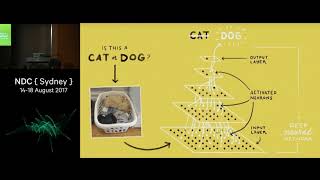
A neural network implemented with TensorFlow/Keras tries to learn the Fizz Buzz rule and succeeds unevenly: using binary encoding as input a one‑hidden‑layer net with 25 hidden neurons gets almost all outputs right and learns divisibility patterns (especially mod 15) by effectively ignoring bit flips, while tiny linear or logistic models fail and massive nets like 2,000 by 2,000 can reach perfect accuracy only stochastically. Code is on GitHub, visualizations and confusion tables show which numbers and mistakes the models actually make.
AI-written summary · about
chapters (11)
- 0:00Introduction
- 4:19FizzBuzz problem
- 7:45ML approach to FizzBuzz
- 11:54Keras vs TensorFlow
- 14:01Testing regression models
- 15:46Neural networks with layers
- 17:35Deep learning and overfitting
- 18:38Analyzing neural logic
- 24:47Binary vs decimal encoding
- 25:49Lessons learned
- 26:51Q&A
related talks
 39mArtificial Intelligence vs. Natural Stupidity
 08mTen Ways To Fizz Buzz
 01h 06mDeep Learning with TensorFlow
 29mUnderstanding Neural Networks with TensorFlow Playground
 36mNeural Networks
 37mCode First, Math Later: Learning Neural Nets Through Implementation and Examples
 56mTeach Your Computer to Code FizzBuzz
 59mTensorFlow in Three Sentences