From Data to Pathways: Personalizing Learning Experiences

summary
A lightweight recommendation engine maps 10-question submissions to three learner clusters using KMeans clustering, scikit-learn pipelines, pandas cleaning and PCA visualization. The dataset has 63 respondents and yields a silhouette score 0.09, so clusters are soft but interpretable; mode-based profiling produces three personas (49.2% beginners with clear goals, 36.5% misguided newcomers, 14.3% advanced needing guidance). The system returns curated course paths from a course library; deployed live it generated two direct responses, one enthusiastic and one uncomfortable, so recommendations are delivered without exposing persona labels.
AI-written summary · about
chapters (8)
- 0:00Introduction and background
- 1:19Personalized learning challenges
- 4:40Building the recommendation engine
- 10:05Creating learner personas
- 16:40Testing and refining recommendations
- 18:32Python's role in implementation
- 19:18Live demo of the code
- 25:49Conclusion and Q&A
related talks
 03mApplying data and machine learning to scale education
 41mRecommender Systems: Crafting Effective Personalised Experiences
 19mAdvancing Personalized Learning Analytics with AI and EdTech
 01h 21mUnlocking Personalization: A Deep Dive into Modern Recommendation Algorithms
 43mBuilding your first recommender
 35mSpotting trends and tailoring recommendations: PySpark on Big Data in fashion
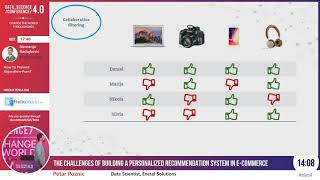 29mThe Challenges of Building a Personalized Recommendation System in E-Commerce
 28mThe Power of Personalized Customer Experiences Through AI Innovations