Sounds good!
summary
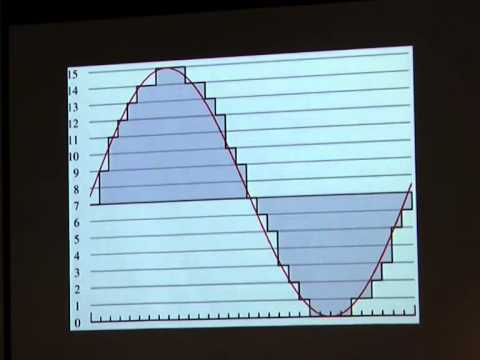
Shows a working Python synthesizer built live: uses PI audio (PortAudio bindings), opens a mono 32‑bit float stream at 44100 samples per second, generates buffers of 1024 frames per loop, and outputs random samples (white noise) then a 440 Hz sine wave by incrementing theta per sample. Explains bit depth, sampling rate, harmonics and ADSR envelopes, and demonstrates the code actually produces audible tones during the demo.
AI-written summary · about
chapters (23)
- 0:00Start
- 0:54create a digital representation for sound
- 1:42pluck the highest string on a guitar
- 3:12defining sound pitch and amplitude
- 3:48quantify the difference between two sounds of identical pitch and amplitude
- 5:19determined by the harmonic content of the signal
- 6:00perform a fourier transform on a very small segment of this wave
- 10:00start the clarinet making sound by hitting the clarinet reed
- 14:10call each of these piecewise measurements a sample of sound
- 16:52provides python bindings for the the cross-platform port audio library
- 17:24implement a very simple sound synthesizer
- 17:43import the pi audio module
- 18:28set the sampling rate to 44100 samples per second
- 18:54set the short output sound flag to true
- 19:44generate a whole heap of samples
- 20:35put in the main audio loop
- 21:28start off here by initializing a list of raw frames
- 22:33set the the amplitude of our sound to unity
- 23:15multiply our sample by the amplitude
- 26:07create our sign tone at a frequency of 440 hertz
- 26:32first measurement of the sine wave
- 29:14pre calculate all our samples
- 29:46resonating at a frequency of 440 hertz