Using Cython for distributed-multiprocess steganographic md5sum-collision generation
summary
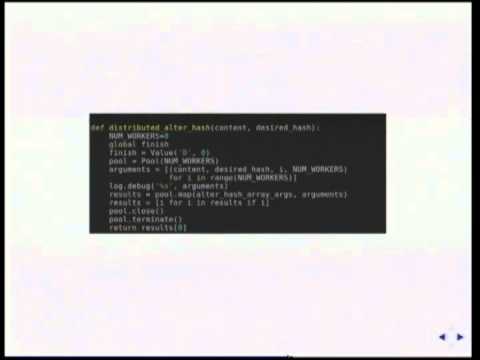
Uses Cython plus Python’s multiprocessing to brute-force md5 collisions for the last six hex digits (24 bits ≈ 16 million tries), moving per-page work from about 10 minutes down to 3–30 seconds (sometimes ~2s) on an eight‑core box; appends a small base‑5 whitespace payload (typically 10–15 characters) to hide the gibberish and generate chosen suffixes; builds a steganographic pastebin labyrinth that works, exposes the pastebin’s lack of salting, and leads to a subsequent server patch.
AI-written summary · about
chapters (9)
- 0:00Introduction
- 0:54The paste bin context
- 3:20The quest for MD5 collisions
- 6:46Cython and performance
- 10:56Multiprocessing in Python
- 13:54Hiding the hash garbage
- 16:00Building the labyrinth
- 19:10Lessons in procrastination
- 20:07Q&A and technical discussion
related talks
 30mAll in the timing: How side channel attacks work
 33mA low latency deepdive of Python with Cython
 31mCFFI, Ctypes, Cython The Good, The Bad and The Ugly
 28mRandomness in Python: Controlled Chaos in an Ordered Machine
 33mEasy wins with Cython: fast and multi-core
 28mBuild your first Cyber Forensic Application
 21mUse Python to process 12mil events per minute and still keep it simple (Talk)
 01h 11mMay 18, 5pm