Agents of Change: From Time Saved to Intelligence Activated

summary
Argues for building a shared “agent habitat” that logs everything and makes agents bi-directional so human judgments become retrievable institutional memory; captures tribal knowledge into reusable knowledge graphs and uses multi‑model retrieval to select the 3–4 most relevant chunks (and then the 10 most relevant sentences) for a task. Reports a 10‑Q analysis that exposed varying definitions of “most recent quarter.” Flags governance delays (approvals take weeks to months as models continuously update), and threats like memory poisoning and prompt‑injection, recommending sandboxes, on‑prem controls and strict access policies.
AI-written summary · about
chapters (10)
- 0:00Introduction and context
- 1:12From efficiency to amplification
- 4:45Building a shared intelligence layer
- 14:05Mindset shift for AI adoption
- 16:55Balancing speed and governance
- 19:14Technology adoption challenges
- 25:25Trustworthy knowledge retrieval
- 29:00Security risks in AI agents
- 33:36Open floor Q&A
- 37:47Procedural memory in system intelligence
related talks
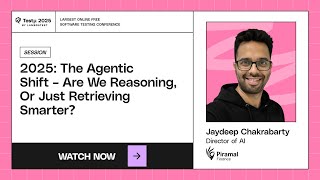 52mThe Agentic Shift- Are We Reasoning, Or Just Retrieving Smarter?
 16mMulti-Agent Intelligence for Next-Gen Insights
 29mBuilding Trust in AI Agents
 45mAI agents in practice - beyond the prototype
 46mIntelligence as Infrastructure: What Developers Must Learn to Build with AI
 28mAgentic AI
 30mArchitecting Integrity: Responsible Software Evolution in the AI Era
 24mAI Governance for developers: A practical framework for deploying autonomous coding agents safely…