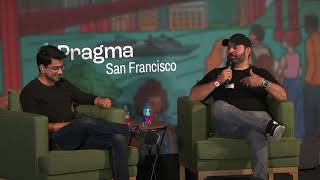
Fireside Chat

summary
Started as a hackathon project to put public procurement on-chain, Tenderly pivots from an open-source stack-trace extractor to a paid infra suite that now provides a first solidity stack trace, RPCs, virtual test nets and wallet-level security scans. Running full archival nodes costs “hundreds of thousands of dollars a year,” making dev tooling true infrastructure. Contract verification remains surprisingly brittle and slow, and the practical rule of thumb is to do most work off-chain compute and put proofs or verification on-chain.
AI-written summary · about
chapters (48)
- 0:00Introduction to Bogdan Habic and Tenderly
- 0:49Origin story: From public procurement hackathon to Tenderly
- 1:17Transition from Hyperledger to Ethereum tooling
- 1:42Tenderly's open-source roots and pivot
- 2:11Early days of EVM tooling (2017)
- 2:35Challenges of building dev tools as open-source
- 3:04Debugging smart contracts in 2017
- 3:31Inventing missing Web2 tools for Web3
- 3:56Tenderly's current product suite
- 4:26Security scanning for wallet transactions
- 4:54Cost challenges in Web3 developer tooling
- 5:22Why dev tools are infrastructure in Web3
- 5:50Collaborative nature of blockchain development
- 6:22Foundry's limitations in collaborative debugging
- 6:50Unique challenges of shared database paradigm
- 7:18Developer tooling as infrastructure
- 7:47Biggest problems in Ethereum developer ecosystem
- 8:18Solidity's limitations vs ecosystem needs
- 8:52Debugging symbols and ecosystem growth
- 9:23Overpromised timelines vs long-term value
- 9:51Generational adoption of blockchain technology
- 10:22Simplifying crypto for mainstream adoption
- 10:58Evolution from Truffle to Hardhat to Foundry
- 11:26Importance of learning from past tools
- 11:53Open-source vs closed-source tensions
- 12:22Business challenges of open-source dev tools
- 12:47Monetizing public goods in Web3
- 13:16Tenderly's path to open-sourcing
- 13:45Foundry's success factors
- 14:12Founder perspectives on open-source
- 14:39Sustainability in dev tool businesses
- 15:10Experimentation with alternative VMs
- 15:40Ethereum's stability vs innovation tradeoffs
- 16:06EVM compatibility nuances
- 16:35Risks of VM incompatibility
- 17:06EVM equivalent vs compatible confusion
- 17:36Stylus and WASM experimentation
- 18:06Contract verification challenges
- 18:39Importance of source code visibility
- 19:06Two benefits of contract verification
- 19:34Debugging across smart contracts
- 20:04Web2 vs Web3 debugging comparison
- 20:33Advice for building complex on-chain systems
- 21:03Verification over execution principle
- 21:38Balancing on-chain vs off-chain logic
- 22:09Scaling TPS vs developer growth
- 22:38Future of off-chain compute
- 23:05Closing remarks