Engineer's Lifecycle Management - Remote First Environment
summary
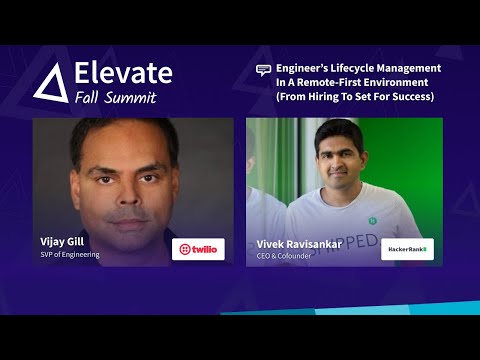
Company shifts to distributed remote first work with synchronized office days and a rule that anyone in-office joins meetings by phone to avoid bandwidth differences. Hiring moves from gut interviews toward HackerRank screens and try-before-you-buy internships (Twilio Hatch) as the best predictor of on‑job performance. Onboarding gets written checklists, cross-team chalk talks and virtual escape rooms to rebuild lost serendipity; Microsoft data about decaying inter-team ties motivates deliberate offsites and continuous reinforcement. 65 million developers expands the pool but not the signal.
AI-written summary · about
chapters (27)
- 0:00Introduction
- 1:00Vijay Gill Twilio
- 3:00How do you source talent
- 4:00How do you organize your teams
- 5:00Team cohesion
- 6:00Selforganizing
- 7:00Entropy
- 8:00Hiring
- 9:00Interview
- 10:00Interview Signals
- 11:00Personal Biases
- 12:00Bar Raisers
- 13:00Bias
- 15:00Microsoft Research
- 16:00Chalk Talks
- 17:00Scale
- 18:00Zoom fatigue
- 20:00Microsoft paper
- 21:00Offsite approach
- 22:00Diversity Inclusion
- 23:00How to Interview
- 24:00Interviewing in India
- 25:00Interview Process
- 26:00Identifying the best version of the candidate
- 27:00Future of remote work
- 28:00Building connective tissue
- 29:00Wrap up
related talks
 42mSustaining Remote – First Teams.
 40mBeing a remote developer
 48mBuilding A Remote Engineering Culture
 29mRemote(ly) Better Than Before
 52mWork Anywhere: Managing Remote Engineering Teams at Airbnb
 57mLessons from {distributed,remote,virtual} communities and companies
 36mRemote work is here to stay: and what's next?
 01h 06mLeading successful remote teams