Tuning community parameters: Hosting Postgres events that perform
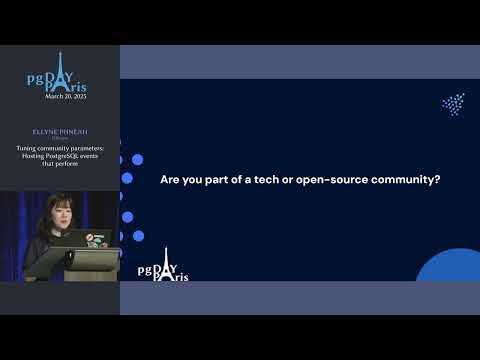
summary
Practical guide to launching and growing a PostgreSQL user group: use Meetup/LinkedIn and partners (F‑cafe or co‑working spaces), run events every few months, measure attendance/engagement and apply Kirkpatrick’s four levels, and add Slido/Mentimeter for live interaction. Example build: DBtune V2: continuous monitoring, self‑hosted deployment, always‑on agent, config history and local group outcome: M‑PUG: 90 members, 45 attendees at first event. Handle no‑shows with waitlists and on‑the‑spot lightning talks; coach speakers and record sessions.
AI-written summary · about
chapters (19)
- 0:00Welcome and introduction
- 1:25About the speaker and DBtune
- 5:39What is a community
- 9:08Why community matters for Postgres
- 11:59Postgres as a global community
- 13:24Postgres user groups worldwide
- 16:35How to become an official Postgres user group
- 19:00Launching Malmö Postgres user group
- 22:35Five steps to organize a Postgres event
- 24:20Finding partners for your event
- 25:43Planning content and speakers
- 27:12Event logistics and challenges
- 30:23Boosting attendance and engagement
- 33:33Case study: Last-minute speaker crisis
- 36:01Measuring event success
- 37:07Post-event strategies for growth
- 40:38Three key takeaways for organizers
- 41:43Call to action for community involvement
- 43:27Q&A session
related talks
 37mPostgreSQL Meetup Lille: Lessons Learned
 33mElephant in a nutshell - Navigating the Postgres community 101
 32mWhat I learned about the PostgreSQL Community
 51mPostgreSQL Panel Discussion
 21mDiscovering Postgres...
 19mPGDay Lowlands 2025 Lightning Talks
 33mTuning PostgreSQL to work even better
 46mUse PostgreSQL to Step Up Your Game