How ZNS SSD's Are Changing the Landscape

summary
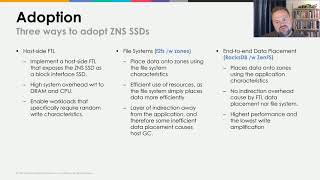
Zone Namespace SSDs expose all NAND to the host so overprovisioning disappears and usable capacity equals raw capacity, delivering predictable p99 latency under mixed read/write and 3.5x endurance on read‑intensive (≈1.5x on write‑intensive) compared with conventional FTL drives. Linux kernel + Percona Server/MyRocks and zenfs integrations exist and WD ships devices; benchmarks show ~3.3× throughput vs alternatives, fleet planning cuts thousands of drives and millions in capex (example: 400 PB saves ≈4,800 drives).
AI-written summary · about
chapters (4)
related talks
 16mZNS: Avoiding the Block Interface Tax for Flash-based SSDs
 27mPreview: Storage
 45mBig Data and SSDs
 25mPerformance Analysis of NVMe SSDs and their Implication on Real World Databases
 19mA zone-aware cache system for distributed databases
 14mOperational Characteristics of SSDs in Enterprise Storage Systems: A Large-Scale Field...
 20mMaximizing the Benefit of Flash Storage for Aerospike
 30mHybrid XFS: Idea to Exabytes in 12 Months