What Makes Open Source Communities Thrive Remotely?
summary
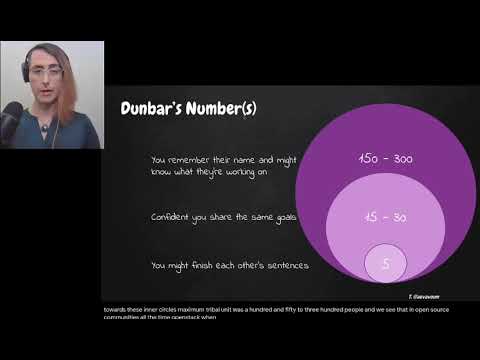
Remote productivity drops because loss of social grooming breaks team cohesion; evidence: Dunbar-style limit around 150 people, face-to-face meetups about every six months, and teams above roughly six people incur a heavy communication tax. Practical fixes described: mandate equal-bandwidth setups or reorganize time zones, require templated, versioned docs (not meeting recordings), reward documentation as much as code, and small fixes like a $100 four‑panel folding room divider to recreate a visual work boundary at home.
AI-written summary · about
chapters (9)
- 0:00What Makes Open Source Communities Thrive Remotely?
- 5:20Work/Life Balance
- 7:57Accessibility
- 10:16Dunbar's Number(s)
- 13:24Unintended Cliques Affect Everyone
- 14:34Balance The Bandwidth
- 16:14How Do We Reduce Communication Tax?
- 19:10Social Supports
- 22:00Diverisity -vs- Inclusivity
related talks
 13mManaging Remote Teams
 57mLessons from {distributed,remote,virtual} communities and companies
 42mSustaining Remote – First Teams.
 07mCreating Belonging in Remote Teams
 16mHow distributed Open Source projects handle the need for in person trust
 52mRemote Working Approaches That Worked (And Some That Didn’t)
 26mCreating Space for Remote Work
 22mRemote Right: How to Thrive in a Post-Office World