The Butcherbird Combinator

summary
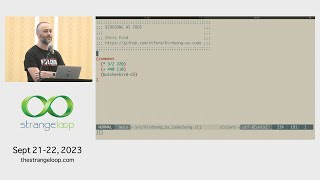
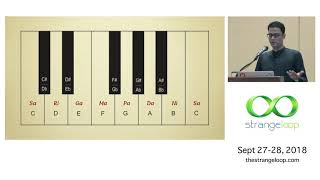
Argues that modeling birdsong as exact harmonic multiples fits better than human 12‑tone tuning and connects that choice to emic vs etic risks in software design. Live codes in Clojure and builds a tiny DSL and a reprogrammed keyboard to play a linear harmonic scale, showing concrete audio demos and one bracket error during the demo. Compares fits with a simple metric giving difference of squares: 942 vs 563 (lower is better), and shows the linear model both aligns with recordings and changes what can be represented.
AI-written summary · about
chapters (17)
- 0:00Welcome
- 1:30Modeling decisions
- 4:44Etic vs emic modeling
- 8:14Zoo musicology
- 11:43Frequency and pitch
- 13:26Harmonics and fractions
- 19:04Human scales
- 21:57Western notation limits
- 24:27Bird scales
- 26:56Human vs bird scales
- 29:57Octave equivalence
- 32:05Butcherbird motifs
- 36:19Live coding challenges
- 36:39Pseudo-scientific analysis
- 37:21Critique of Hollis Taylor
- 40:11Bird’s perspective programming
- 41:56Live performance