Implementing Event-Driven Microservices Architecture (...)

summary
Claims an event driven microservices architecture implemented in F# on Microsoft Azure actually runs at Jet scale with 700+ microservices, 25,000 orders/day, ~8 million customers and ~15 million SKUs. Uses event sourcing for replayable state, Splunk, Redis and a custom F# Kafka instead of RD Kafka, and an in‑house logging/telemetry stack. Reports a compact codebase (tens to low hundreds of MB), ~20–30% less code than C#, better compile‑time correctness, and notes problems with off‑the‑shelf event stores prompting replacement.
AI-written summary · about
chapters (15)
- 0:00Introduction
- 0:22Background
- 0:56Architecture
- 3:03Technology stack
- 4:09Microservices
- 5:26Why C
- 7:31Functional Paradigm
- 8:58Input Events
- 10:29Advantages
- 14:57Conclusion
- 16:22Questions
- 16:41Implementing EventDriven Microservices
- 18:24Why Microservices
- 20:53How to make sure components work together
- 23:26Monitoring
related talks
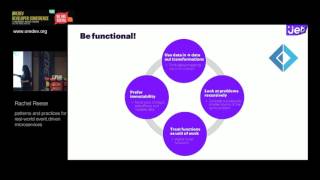 38mPatterns and Practices for Real-world event-driven microservices
 55mPatterns and practices for real-world event-driven microservices
 59mImplementing Event-Driven Microservices architecture in Functional language
 01h 08mEvent Driven Architecture – Enabling Microservices
 45mCommon quandaries implementing your first Event Driven Architecture
 48mChallenges in Implementing MicroServices
 58mImplementing Event-driven Microservices
 57mEvent driven architectures on Azure