Karp Plays a Game

summary
Claim: given two engines with one blunder each and the blunders never coincide, a simple randomized procedure lets a nonexpert win a winning chess position with constant probability (roughly a quarter). Method combines coin-flip plus round-robin tests to detect biases, burning opponents’ errors over the game; extensions improve the success rate toward a sqrt(m) bound for m errors. Suggests experiments with modern engines and notes humans+engine play can add ~100 Elo in small trials.
AI-written summary · about
chapters (7)
- 0:00Introduction and reflections
- 4:25Revisiting past research
- 8:19Chess as a conceptual model
- 10:56Computer chess and cheating
- 15:19Humans helping machines
- 21:09Probabilistic advice algorithm
- 28:49Q&A and broader implications
related talks
 17mPlay Magnus
 11mGames People Play
 15mChess in the Age of Artificial Intelligence
 29mBuilding a Game Engine for 300 DEFCON Hackers to Smash
 15mAI Self - Learning Game Playing
 15mTeamwork Makes The Von Neumann Work: Two Team Zero Sum Games
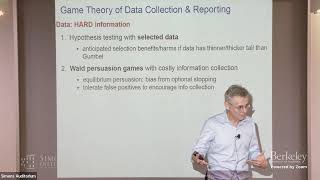 48mInformation Collection Through Strategic Agents
 31mLearning in Games with Best-Response Oracles