A Practical(ish) Introduction to Data Science
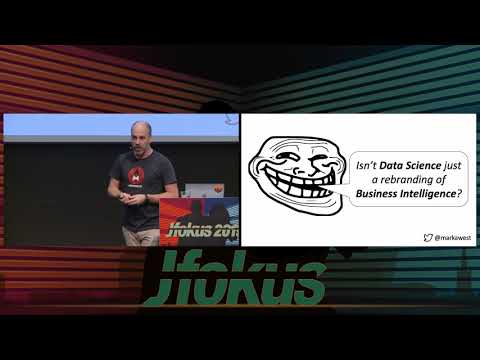
summary
Defines data science vs BI, shows practical steps to go from hypothesis and messy data to production-ready models, and emphasizes feature engineering and role split (data scientist, data engineer, viz). Explains linear regression, decision trees, k‑means and random forests; demonstrates a Titanic model using Python with scikit‑learn, pandas, numpy and Jupyter notebook on 891 rows (177 missing ages imputed by honorific medians), 75/25 train/test split, decision tree baseline 74.8% rising to 80% accuracy after limiting depth.
AI-written summary · about
chapters (13)
- 0:00Start
- 1:55Agenda
- 20:05Decision Tree: Calculating the Best Split
- 20:26Building a Decision Tree: A Bad Split?
- 21:17Decision Tree: Recursive Partitioning
- 22:14Building a Decision Tree: Where to Stop?
- 22:37Decision Tree Notes
- 23:12Example Machine Learning Algorithms
- 25:43K-Means: Calculating the value
- 27:43K-Means Clustering Notes
- 28:11Machine Learning Algorithms: Key Takeaways
- 29:43Use Case: Titanic Passenger Survival
- 30:03Hypothesis
related talks
 41mA Practical-ish Introduction to Data Science
 45mA Practical Introduction to Data Science
 44mA Practical-ish Introduction to Data Science
 55mData Science Fundamentals
 40mEveryone can Data! - A Practical Data Science Intro
 42mI'm Starting in DataScience – Where to Begin?
 04h 02mHands-on Session on Data Science for Beginners
 19mData science demystified