Asynchronous Data Streams in Angular 2

summary
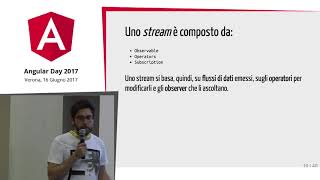
Angular 2 adopts Reactive extensions so UI and network work become observable sequences that compose with operators like map filter reduce and merge, and the new HTTP module returns Observables (example: http.get(...).map(res => res.json())). Demonstrations include rx.interval().take(3), subscribe/unsubscribe mechanics, a marble-diagram visualizer, and a concrete users service + component that subscribes to JSON, showing that arrays are faster for small sets but streams use far less memory for large datasets.
AI-written summary · about
chapters (15)
- 0:00Intro
- 0:42About me
- 2:40plunker
- 3:25Upcoming events
- 5:07Asynchronous Data Streams
- 17:17Implementation
- 18:40Key Concepts
- 22:42Marvel Diagrams
- 28:09Observer
- 29:01Unsubscribe
- 30:07Arrays vs Streams
- 32:00Example
- 34:39TypeScript
- 37:57Overview of Features
- 42:28Demo