Good to Great: from Spring Boot to Micronaut

summary
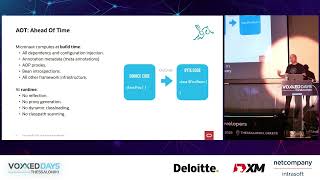
Micronaut claims faster startup and lower memory by moving bean metadata and wiring to compile-time AOT bean generation and by avoids reflection via introspection; it uses Gradle annotation processors to emit bean definitions, supports Java/Groovy/Kotlin, Micronaut Data (Spring Data–style), Swagger, Flyway, Kafka/RabbitMQ, and a reactive Netty HTTP client. Tests run with JUnit5 and MockBean and MicronautTest spins a full app context; tradeoffs are longer compile times, smaller community, and clunky exception handling, but a customer service runs in production for a year without bugs.
AI-written summary · about
chapters (30)
- 0:00Introduction
- 1:09Micronaut overview
- 3:21Web frameworks evolution
- 5:32Micronaut history
- 8:04Bean scopes and context
- 11:18Conditional beans
- 13:11Compile-time advantages
- 14:38Testing frameworks
- 18:40Live demo setup
- 20:31Controller layer
- 23:10Service and repository
- 25:48Entity and validation
- 28:52Configuration and errors
- 30:42Bean initialization
- 33:51Production example
- 34:13Drawbacks
- 36:49Quarkus comparison
- 38:37Closing remarks
- 39:20Q&A
- 40:04Lombok integration
- 41:09Kotlin null safety
- 42:15HTTP client
- 43:41Debugging Micronaut applications
- 45:12IDE support
- 46:15Starters and customization
- 48:45Micronaut annotations vs Jakarta annotations
- 49:50Virtual threads
- 51:37Programmatic beans
- 54:05Spring Boot vs Micronaut
- 55:52Framework selection
related talks
 56mDeveloper experience in a modern Java framework
 52mSkyrocketing Development Of Your Microservices With Micronaut
 33mGetting Started with the Micronaut® Framework
 46mDeveloper experience in a modern Java framework
 02h 54mMicronaut Deep Dive
 47mIntroduction to Micronaut Lightweight Microservices with Ahead of Time Compilation
 57mIntroduction to Micronaut 2.0
 52mMicroservices with Micronaut