Explanation: A(N Abridged) Survey

summary
Proposes a formal definition of (causal) explanation: a fact the agent does not already know for certain that, if true, would be an actual cause of the explanandum across the agent’s epistemic state. Uses structural causal models with interventions (the do-operator), minimality and a stronger sufficient cause condition, and treats partial explanations via probability and normality. Works through arson (disjunctive vs conjunctive), tanning and oxygen examples, shows the definition fits many puzzles but reveals tradeoffs among goodness criteria.
AI-written summary · about
chapters (12)
- 0:00Start
- 2:46Explanation: An Abridged History
- 3:49Why Knowledge Matters
- 4:46Causal models
- 8:18Example 1: Arsonists
- 8:46Arsonist scenarios
- 13:25Explanation: The Basic Definition
- 16:29Explanation: Examples
- 22:56Partial Explanations: Examples
- 26:07Explanatory Power
- 27:13Competing notions of goodness
- 28:07Conclusion
related talks
 09mAre Explanations Helpful? A Comparative Study of the Effects of Explanations in AI-Assisted ...
 30mFrom Constraints to Cognition: A Hybrid Framework for Adaptive, Explainable(…)
 23mExplanation and Knowledge Acquisition in Ad Hoc Teamwork
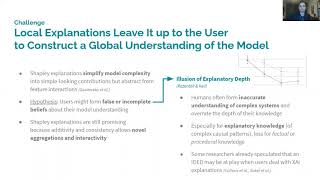 10mI Think I Get Your Point, AI! The Illusion of Explanatory Depth in Explainable AI
 17mContext Graphs for Explainable, Decision-Aware AI Agents
 45mAI-404: explanation not found
 09mVisual, textual or hybrid: the effect of user expertise on different explanations
 50mDehumanizing Agents: Why Explainability is Crucial in the LLM Era