KUBERNETES EXTENSIBLE MODEL EXPLAINED: CRDS AND OPERATORS

summary
Claims that Kubernetes automation for stateful legacy apps is practical by combining CRD + controller operator pattern with existing primitives; demos run on minikube creating custom resources like apples and a Magento operator that spawns varnish Apache and PHP‑FPM deployments and services; controller code uses Go client libraries, informers, cache and leader election and is about 100–200 lines of Go; operators run in‑cluster as a Deployment and in the demo successfully instantiate and reconcile the application stack.
AI-written summary · about
chapters (27)
- 0:00Introduction
- 1:14Why we are here
- 2:23Infrastructure Automation
- 3:08Application Management Automation
- 4:10Kubernetes Plugin Ecosystem
- 9:50API Access Plugin
- 11:12Basic Infrastructure
- 13:29IP Version
- 15:22API Structure
- 16:31Customer Sauce
- 17:24Demo
- 17:35Cluster Show
- 18:06Group of API
- 19:58Group of Controller
- 20:08Controller Manager
- 20:48Controller
- 25:22Automation
- 27:17Operators
- 28:01Container
- 28:50Operations
- 29:29Creating our own tools
- 31:24We dont want to do this
- 33:29Alternatives
- 34:46Problems
- 36:38Recap
- 38:47Open Source
- 40:01Operator Kit
related talks
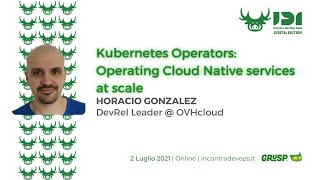 45mKubernetes Operators: Operating Cloud Native services at scale
 14mDemystifying k8s operators
 31mKubernetes Operators within Reach of Any Developer
 55mIntroduction to Kubernetes Operators
 34mExtending Kubernetes 101
 40mExtending K8s- Introducing Custom Resources, Controllers, Operators & Schedulers
 48mKubernetes as backend: CRD & Operators
 31mKubernetes is a Platform Platform