Building and Verifying Security Trust in Today’s Complex Tech Stacks ...

summary
Claims that typical apps contain over 90% third‑party code, that exposed cloud accounts get compromised in ~36 hours by bots, and that automated CI pipelines stop the build on critical vulns drive the agenda. Concrete practices include cataloging dependencies, scanning containers before release, signing and storing original third‑party artifacts, using Splunk and CrowdStrike for logging/endpoint telemetry, enforcing mutual TLS and TLS1.2+ encryption, testing backups and rollback plans, and commissioning penetration tests (order‑of‑magnitude cost ~$50k) to verify trust.
AI-written summary · about
chapters (19)
- 0:00Security trust in complex stacks
- 1:03Trust and verification in security
- 2:46Weakest link in security trust
- 3:28Governance for security trust
- 4:13Zero trust for software
- 6:20Users and credentials risks
- 7:46Security costs vs user experience
- 8:29Third-party and open source risks
- 9:53Legacy systems trust
- 10:37Secure cloud migration
- 11:59Compliance in multi-country
- 13:02Multi-tenant ops complexity
- 14:04Mutual authentication
- 15:08Trust boundaries and attack vectors
- 16:13Security in DevSecOps
- 17:35Automating trusted ops
- 18:58Trust through constant improvement
- 20:00Cyber attack response
- 21:42Final thoughts and answering audience questions
related talks
 38mPrioritizing Trust While Creating Applications
 30mHow Secure Is Your Build/Server?
 35mPrioritizing Trust while Creating Applications
 18mContinuous Security - Building Security into your Pipelines
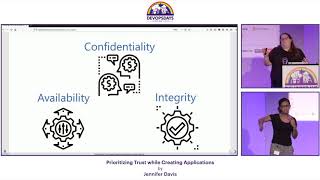 31mPrioritizing Trust while Creating Applications
 31mDevOps: You Build It, You Secure It
 47mBuilding Trust in Open Source: A Practical Guide to Securing Your ...
 29mSecuring Your Web Application Pipeline From Intruders