CommSec D1 - Keynterceptor: Press Any Key to Continue
summary
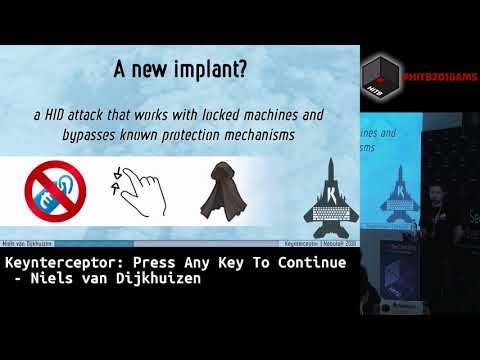
Proof-of-concept Keynterceptor is an in-keyboard implant built from off‑the‑shelf parts (Teensy-like microcontroller, battery-backed RTC, EEPROM and a radio) that captures and later injects keystrokes while keeping local time and avoiding detection. It clones or mimics host USB descriptors, downgrades to low‑speed HID, and adds random delays to bypass cloned USB descriptors checks and superhuman typing detectors. A companion in a power brick uses a 433 MHz UART uplink plus VPN/UMTS to receive logs and commands. Demo captures credentials and later injects a slow payload; power draw increases provide a practical detection vector.
AI-written summary · about
chapters (13)
- 0:00Start
- 0:14This presentation
- 1:55Existing USB HID attacks / tools
- 4:24What's wrong with it?
- 5:12Available protection mechanisms
- 8:59A new implant?
- 10:14Hardware diagram
- 11:34Bypassing protections
- 14:07Power consumption
- 15:32Use-Cases
- 22:26Attacker at a remote location
- 23:44Target outside of working hours
- 27:56Keynterceptor attack feasible?
related talks
 37mHi, My Name Is Keyboard
 40mBiohacking: The Invisible Threat
 11mHow do Keyboards Work? HIDing, in Plain Sight!!
 51mA Measured Response to a Grain of Rice
 52m"New Tales of Wireless Input Devices - Matthias Deeg, Gerhard Klostermeier
 21mTrust already at the input device through authentication and encrypted transmission
 25mThermanator and the Thermal Residue Attack
 45mBadUSB - On Accessories that Turn Evil