Automating Processes in Modern Architectures

summary
Argues that embedding a Camunda workflow engine inside a Spring Boot service removes homemade status tables and schedulers by providing durable state, retries and ops UI; demo shows a payment flow calling a Stripe fake service, returning 202 Accepted while the engine retries (configured to retry 3 times with 1 minute delay) and surfaces an incident if all retries fail. Contrasts brittle event-chain choreography with stateful orchestration owned by the order domain.
AI-written summary · about
chapters (11)
- 0:00Intro
- 2:00Change is the only constant
- 7:52Using a workflow engine instead
- 9:30Who am I
- 10:35Demo
- 17:48Microservices
- 18:48The era of APIs
- 20:05Going hipster
- 21:34Event-driven architecture
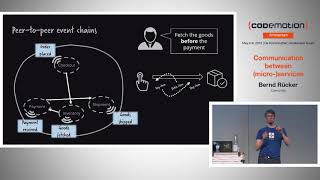
- 29:27Stateful orchestration
- 31:12Summary
related talks
 40mDecoupling your Springboot microservices live coded using workflow automation
 49mThe Benefits of Orchestration in Distributed Systems
 45mLive Coding Some (Microservice) Integration Problems
 40mCommunication between (micro-)services
 46m3 Common Pitfalls in Microservice Integration
 48mLost in transaction?
 52mMovin beyond request-reply: how smart APIs are different
 47mComplex event flows in distributed systems