Responding in a Timely Manner

summary
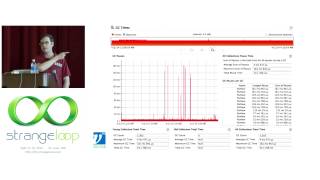
Measures latency on-the-wire with tcpdump/wireshark and HDR histograms, uses HDR Histogram and JHiccup to expose coordinated omission and JVM hiccups, and correlates GC pauses (example: 25 ms pause turning a 50 μs mean into ~300 μs average at 1000 tps). Fixes include upgrading to Disruptor v3, pinning threads to cores, using an aspect to find hashmap resizes, adding bounded queues and 403/503 backpressure, and batching — changes remove the step‑jumps and make latency much lower and far more predictable.
AI-written summary · about
chapters (14)
- 0:00Start
- 7:19Latency Histograms
- 18:34Universal Scalability Law
- 20:33Order of Algorithms
- 28:10Modern Processors
- 31:54Virtual Memory Management
- 33:56Virtualization
- 36:04Law of Leaky Abstractions
- 38:36Clean Room Experiments
- 41:47Smart Batching
- 43:07Applying Backpressure Gateway Service
- 44:35Non-Blocking Design
- 45:05Lock-Free Concurrent Algorithms
- 46:02Cluster for Response and Resilience
related talks
 31mPatterns of Low Latency
 42mWhen the OS gets in the way
 38mTechniques and Tools for a Coherent Discussion about Performance in Complex...
 52mGC Tuning & Troubleshooting Crash Course
 46mTaming the 9s
 47mResolving performance issues in practice
 46mHow to Properly Blame Things for Causing Latency
 44mWhy Do Clients Nitpick?