Optimizing a Prompt for Production

summary
Five practical steps convert a naive prompt into a production pipeline: give direction, specify format, provide examples, evaluate quality, and divide labor. The workflow uses Jupyter + API calls, outputs strict JSON, scores with ROUGE and an LLM judge, and fact-checks via a web-search agent (Tavali). A/B tests run 10–30 samples each; fine-tuning needs ~2,000 passing examples; DSPyOptimizers can auto-tune prompts and reduce cost by switching to cheaper models like GP4 mini.
AI-written summary · about
chapters (15)
- 0:00Intro
- 2:27Agenda
- 4:25What is prompt engineering?
- 11:145 principles of prompting
- 11:361. Give direction
- 13:422. Specify format
- 16:543. Provide examples
- 20:294. Evaluate quality
- 25:145. Divide labor
- 28:22Optimization in production
- 31:45A/B testing
- 33:09DSPy optimizers
- 34:20Fine-tuning
- 38:07The business case for prompting
- 38:29Outro
related talks
 30mIs Prompt Engineering Dead? How Auto-Optimization is Changing the Game
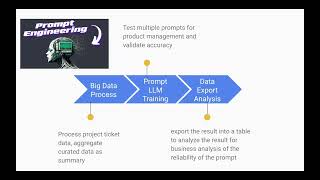 06mPrompt Engineering a Product Manager
 14mPrompt Engineering is Dead
 30mIs Prompt Engineering Dead?
 29mIs Prompt Engineering Dead? How Auto-Optimization is Changing the Game
 38mPrompt Engineering ⚙️ - Addressing the sensitivity of Large language models
 02h 01mPrompt Engineering and AI Red Teaming
 13mPrompt Engineering Simplified