Observability-Driven Development

summary
Argues that TDD alone is insufficient and promotes observability-driven development using real production data; describes the Parse Ruby→Go rewrite and a splitter that forks requests to compare live responses, plus feature flags, canaries and Honeycomb-style high-cardinality tracing. Shows a production-only experiment that simulates rate limiting to validate a shared cache change, uses cardinality analysis to decide compression, and reports that migrating to structured events and removing noisy alerts materially reduces pages.
AI-written summary · about
chapters (10)
- 0:00Introduction to observability
- 2:11Limitations of TDD
- 4:26Defining observability
- 7:01The complexity of systems
- 11:16Distributed system challenges
- 13:23Testing in production
- 19:05Observability-driven dev
- 22:32Practical analysis examples
- 26:46Proactive system management
- 31:09The future of engineering
related talks
 44mObservability: Superpowers for Developers
 53mObservability Driven Development
 31mObservability for Developers: How to Get There
 50mObservability and the Development Process
 31mObservability driven development
 24mWhat is observability-driven development?
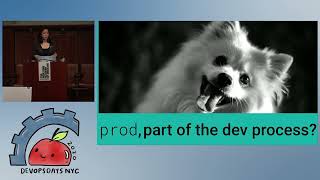 29mObservability for Developers: How to Get From Here to There
 37mBetter Reliability Through Observability and Experimentation